|
|
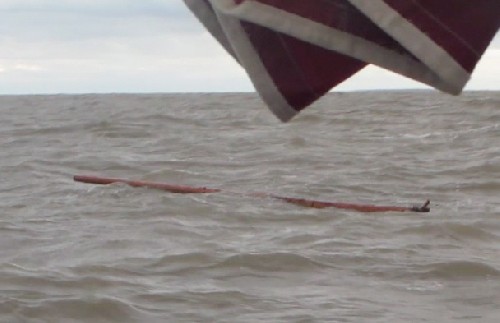
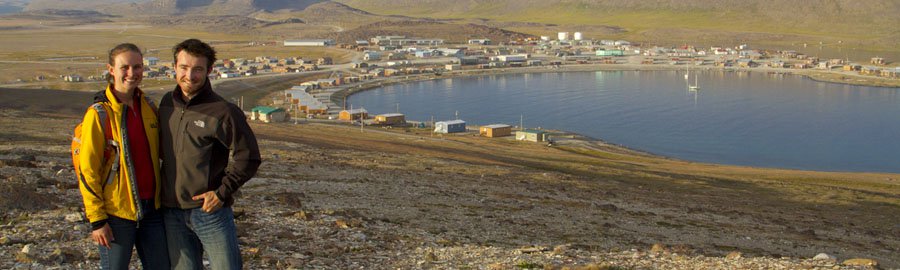
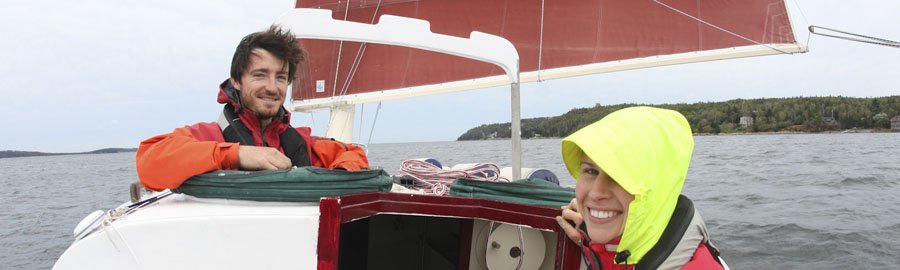
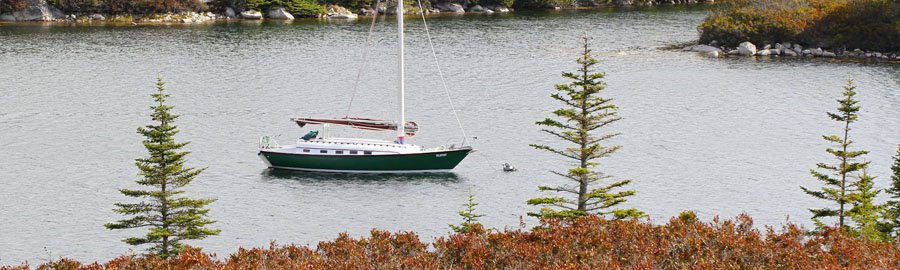
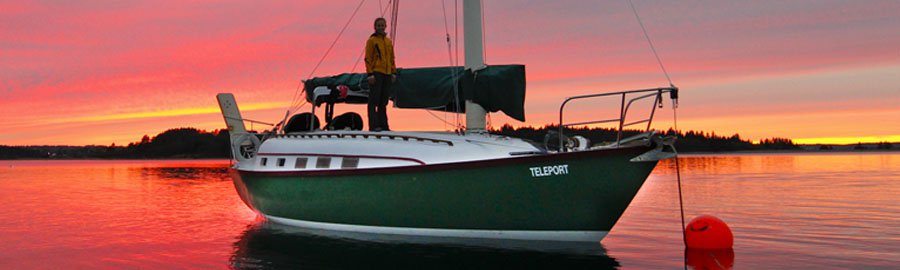
After bashing away motor-sailing to windward in 20 knots (40km/hr) winds for a few days, we finally rounded the corner and started following the bobbing marker bouys leading the way into Tuktoyaktuk (Tuk) (popn 900 people) harbour on the north Canadian mainland. With the wind and large swell now directly behind us, each wave lifted us upwards from the stern and surged us forward, making little Teleport surf down the waves at 11 kn (22km/hr), while I heaved port and starboard on the tiller to guide us around the maze of drifting hunks of wood and even entire tree trunks spewed out here from the mighty Mackenzie River which turns this region of the Beaufort Sea in the Arctic Ocean an opaque brown. Coastguard must have just been through to put the marker bouys back in, because all marker bouys in this part of the world have to be removed during the winter else the drifting sea ice would rip them from the bottom and move them around. I was sure thankful that they were back in place for us now though, because the electronic charts on our GPS chart plotter were way off - rocketing from one green barrel to the next, I watched anxiously as our supposed track on the screen cut right over shoals and even directly through the middle of small islands. The depth sounder was reassuring however, showing at least 10 feet of water beneath our keel at all times. Harnessed into the cockpit and unable to let go of the tiller, I shouted for Jess to give me a hand, but exhausted from sea-sickness and ensconced down below asleep in the bunk, she couldn't hear me above the surging water. Agh well - ce la vie - I thought briefly of our french sailor friend who came through on his own a few days earlier and was now safely inside, but then remembered that the came through in somewhat calmer conditions. Having left Holman (Ulukhaktok), Victoria Island together after sending our last update, Jess and I decided on a detour to explore Banks Island on the way, which I have to say was worth it.
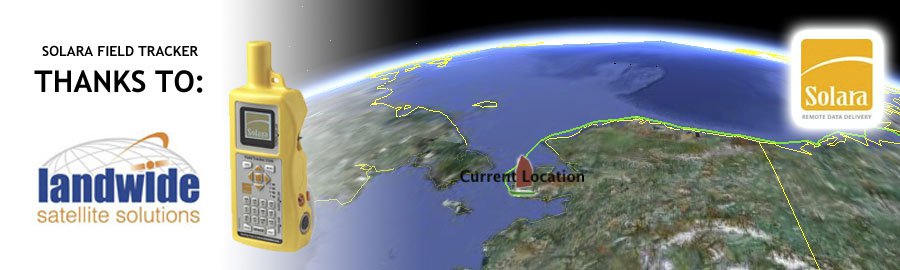
As some of you may have noticed, just as we left Holman we got our jet-delivered Solara Field Tracker up and running, pinging our position back to our embedded Google Earth map on our website live every 30min - thanks very much to Keith in Cambridge Bay who managed to get that so speedily forwarded to us, but also to John from Landwide Satellite Solutions for sponsoring us that tracker, and Tom from Solara for setting it all up for us. Take a look at where we are now for example, and you can even zoom right in and see the actual jetty/wharf that we're tied up to!
Just before we left Holman, our hunter friend Adam generously gave us a farewell present - a plastic bag with a special dinner in it. A dead duck. Yep. feathers, feet, bill and all. In fact, it wasn't just any duck, it was a male King Eider duck, in full breeding plumage - stunningly blue head, bright orange fleshy cheek pouches etc - the kind that we've so often marvelled at as they flew past. We felt a little bit bad, but it would have been rude and awkward to refuse such a gift, and pulling it out of the bag as we sailed out, now that we had it, we figured it'd be wasteful not to eat it, so crouched in the bottom of the cockpit I taught myself how to butcher a duck. I've shot and eaten a couple of arctic Ptarmigan in my time (they're a bit like a plump pigeon), and now as then, I was actually quite surprised at how clean and easy it was to slit open the skin and feathers and just pull it back to expose two enormous breast muscles which cleanly came away, and the same with the leg muscles etc. Buy the time I set the feathery carcass free over the side, I had in front of me quite a pile of very rich looking meat. For dinner I diced it up, spiced it with garlic and some other herbs and fried it up with some pasta - and man was it ever good! I tell you I'll never look at ducks the same as they fly past overhead, so tantalisingly just out of reach!
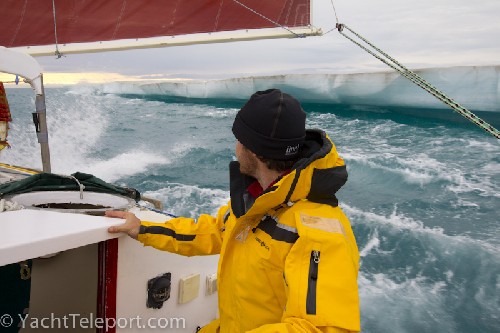
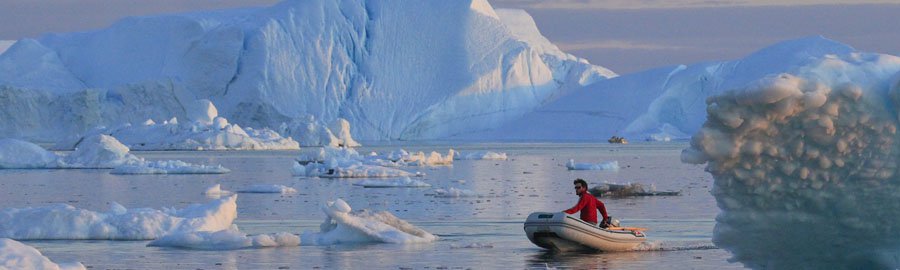
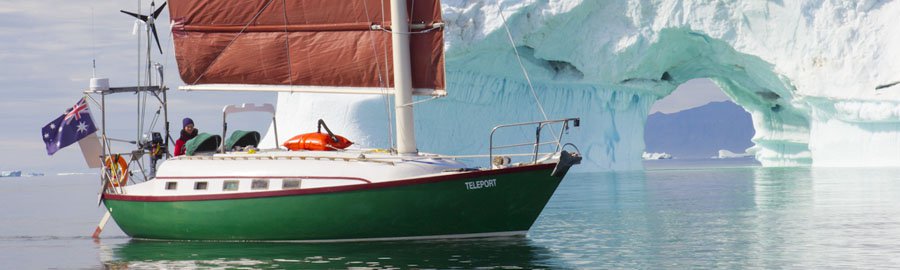
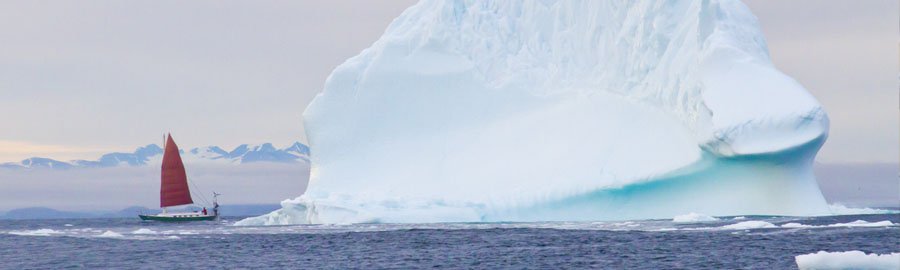
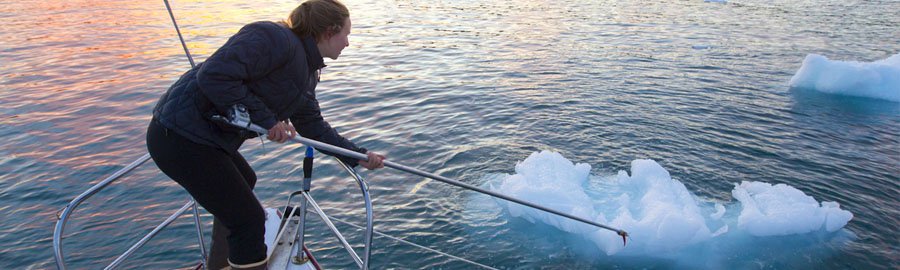
Part way to Banks Island (the last / most-westerly of the arctic archipelago of islands) we started to spot the odd hunk of ice bobbing past, and then at last one much larger plate of glowing sea ice from which all the smaller hunks came. Like the sirens/mermaids of fable, we were inexorably drawn towards this deadly thing of beauty. It was very thick - perhaps 2.5 meters rising above the water (and much more of course protruding downward beneath) and the sunlight filtered through its sides with the same mesmerising blue of the icebergs we encountered in Greenland, the difference here being that unlike the pure, drinkable fresh water that icebergs are made of having come from glaciers, this was a plate of frozen ocean, salt-water. We sailed close along one side, gazing at it in awe, and Jess started getting some great video and photos before the camera lens suddenly jammed up for no reason! Devastated to be missing such a photogenic moment, we quickly put our heads together and fussed over the lens for perhaps half of one second, and it was then that the deadly sirens suddenly struck - causing the wind to suddenly swing just enough crash-jibe our sails (an embarrassing first for this season) and send us sailing directly towards the wall of ice in front of us. *expletive* !!! Frozen in shock for another half-second, I then jumped on the tiller and pulled it back across with all my might, swerving us back on a course parallel and then safely out and away from the ice cliff just in time. That'll teach us! Still, they were great photos! =P
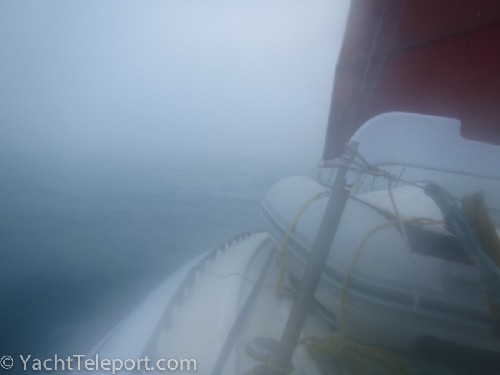
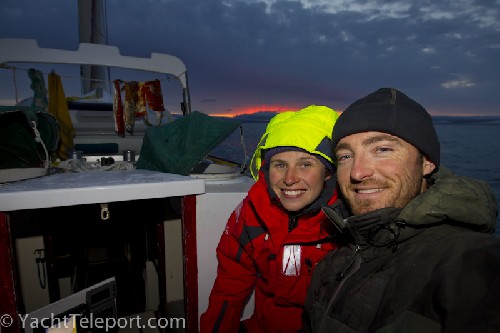
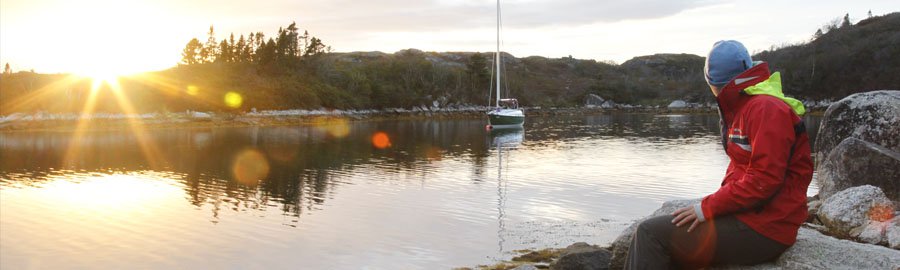
We sailed into De Salis Bay - a large uninhabited bay on the east side of Banks Island around 2 AM the next morning, just as the sun rose from behind the mountains, buying off the fog we'd been completely engulfed by for the previous couple of hours. The fog was the thickest I've ever seen - it was, as they say, "so thick that I couldn't even see my hand in my pocket!" worse even than off the coast of Nova Scotia - visibility of less than 20m. Bathed in morning's beautiful orange glow we snuck around the gravelly spit of land (as you can see on our tracker) and gently felt our way into about 10 feet of water and 'dropped the pick' (the anchor), reversed good and hard to 'set it' (make sure it's dug into the bottom), folded our sea-bunk down into our big double bed and got some much needed sleep for a few hours.
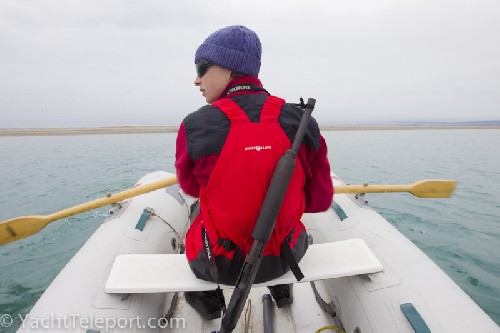
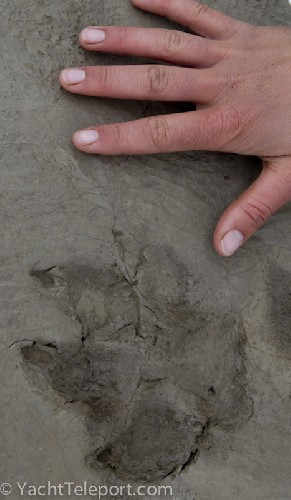
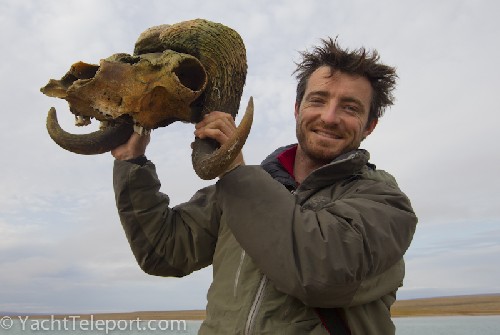
When we woke later that day, we dingied ashore and explored the amazing stoney spit of land, criss-crossed with big arctic wolf tracks, caribou tracks, muskox tracks, muskox skull, and Jess even spotted several polar bear tracks. There were arctic fox tracks too, the sandy places were an absolute patchwork of criss-crossed sandpiper footprints, and the air was alive with screeching and swooping arctic terns. There was lots of age-old driftwood too, beautifully smoothed by the elements over goodness knows how many years that it took it to drift and be carried by the ice here from the nearest forest (thousands of km away). It was a pretty magic place.
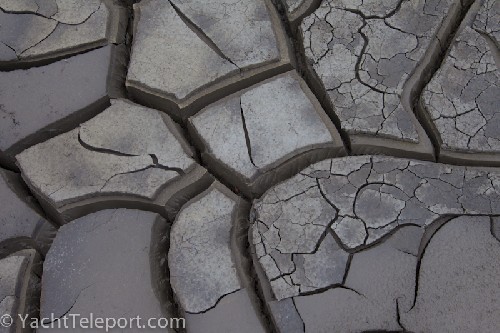
We spent the next two days motoring Teleport incrementally around the almost 20 km perimeter of this massive bay, anchoring in new places, going ashore and exploring - at one point hiking inland for 5km and back, following wolf tracks that were so fresh on the desiccated mud I could still wipe them with my finger - but no matter how far we walked or how many distant white objects we stared at with our 100-400mm telephoto lens, we didn't see a single fox, wolf, bear, caribou or muskox the entire time - but we had a great time nonetheless. One particularly sunny, pleasant evening we even played a game of cards out in the cockpit with chips and a very special treat of rum-and-coke (thanks Keith!), while watching for passing polar bears.
By Wednesday morning the weather GRIB files we downloaded via Iridium satellite (wrongly) predicted increasingly westerly winds, and so we decided rather than sail on west (into the wind) to Tuk, we'd instead head south to Cape Parry where we expected to meet up with Luc, and wait for an easterly weather system to sail onwards together to Tuk. Annoyingly, heading out of De Salis Bay the wind and waves were actually from the south, right in our face, but assuming it to be a localised effect curving around bottom of the island, we persevered, bucking and plunging doggedly into it for six hours until we cleared the bottom of the island, only to discover that no, it really was still a southerly wind out at sea too, but we'd come too far to turn back, and so we lurched onwards all day, waiting (in vain) for the winds to swap westerly as predicted, which the did, pretty much just as we pulled into the shelter of Cape Parry at 4AM, only to discover that we were alone. Luc had already left a few days ago for Tuk! Damnit! Cape Parry looked like an exceedingly barren, boring place to wait out the rest of this epic westerly weather system, and apart from the fact that we like Luc's company and having the reassurance of being able to bounce ideas and plans off each other, we secretly hated the fact that we'd now always be 'behind' Luc, perpetually feeling the pressure to keep going, because after all, even though we wintered in Cambridge Bay meaning we have half as far to sail this season compared to a yacht trying to do the whole passage in one season, it is still very much a race against time out here. We all desperately want to get safely through the dreaded Bering Strait (between Alaska and Russia) before the terrifying storms of September kick in producing likely the worst sea conditions on the planet. So for this and other reasons, Jess and I decided to only drop anchor for 4 hours to get some solid sleep, before we then up-anchored and motor-sailed back out into the weather again, now heading west, into the now westerly winds in a bid to get to Tuk ASAP.
It was pretty heaving going, pretty large and quite confused seas (waves and swell from 2 directions at once) and the wind mostly 20 deg off the bow (i.e. pretty much head on, but just enough to get a little help from the sails, which having these up also helps dampen the rolling of the boat), and blowing up to 25 kn. Still, with all eight horses charging around and around inside the engine box, we were making progress, but unfortunately eventually Jess's up-until now impressively iron-strength stomach (a 'stomach like a hyena' as our friend John in Kenya would say) gave in, and she was pretty sick a lot of the passage, though as ever, she never let it get her down at all, and would refuse all my offers to cut her shifts short (so instead I just let her stay sleeping peacefully for as long as I possibly could stay awake during my shifts, and ignored her indigent reprimands when I finally woke her hours overdue). She's made of stubborn stuff - my fiancee is! =) When on watch, we've both been listening to a whole lot of different 'Conversation with Richard Fidler' podcasts on our iPods (amazingly engrossing 1hr interviews with incredibly interesting people, that's broadcast nationally in Australia ABC radio. You can download them from iTunes, or on their website here: www.ABC.net.au/conversations. They're great to pass the time and stop us from dwelling on the impending doom of sea sickness. I've even been feeling a bit sick on this last leg. Especially when the engine conked out after I somehow lost track of time and thought one morning was still the previous evening and completely ran the engine's tank empty of diesel! This is a massive no-no for diesel engines, requiring you then unscrew and bleed diesel out from various parts of the fuel line and engine to prime the whole fuel pathway again before it'll ever re-start! Not good - head upside down inside the engine compartment, breathing in diesel fumes while lurching around at sea! haha. In my half-hearted defence, I will point out I do keep a meticulous engine log book, with calculations and dip-stick fuel level readings and predicted re-fill deadlines etc specifically to prevent this, but yes, it evidently all still hinges on me being conscious enough to know what time it is. Agh well.
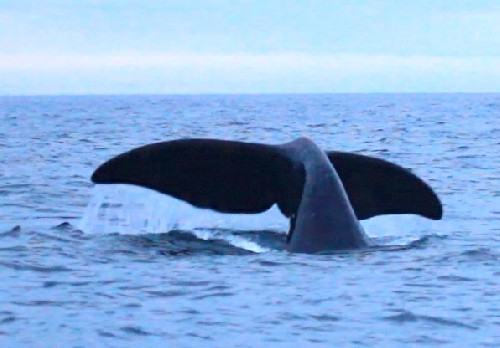
It was during her watch at 2AM one night though that she called out to me "WHALES!!! CHRIS!!!" We've been disappointed at the complete lack of whales so far, and so we were both super excited to see some at last. It turned out to be a massive pod of perhaps 15 or more huge Bowhead whales (an endangered species, which can grow to a staggering 18 meters long - more than twice as long as Teleport!), their spouts blasting into the drab grey 'night time' sky, some even with babies beside them! They're one of the few big whales that regularly show their tails just about every time they go down from a breath, and so there where whale tails everywhere into the distance. Hoping to draw them in for a curious look - like what happened with the pod of Orcas (killer whales) last season - we shut off the engine and silently sailed over towards them, then let out the sheet ropes fully so we basically stopped dead in the water, and waited, holding our breath in anticipation. I stood on the bow with a GoPro camera mounted on our ice pole (a modified extendable painters pole, thanks Keith & patricia!) ready to try and film the giants underwater if they came close enough. They got closer and closer. Tails arching, dripping, and sliding beneath the waves everywhere around us. It was amazing. A few did surface within about 10m of us, the huge oily slick left behind when they dive swirling right beside us, but being such low light at 2AM, the underwater camera caught nothing at that distance. Jess got some great video from the cockpit though - wait for our next video update! Apparently the Inuit still hunt these whales (within a strictly controlled quota, and it's illegal for them to sell to sell the whale) for meat and blubber (a single Bowhead can have up to 30 tons of blubber, up to 50cm think!), and standing there on the bow leaning over with my long steel-pointed ice pole, I did wonder what the whales may be thinking. Later on in the local store here in Tuk, we mentioned to a lady that we encountered some bowheads, and she raised her eyebrows and said "They can be VERY aggressive - ram boats - especially if they have babies - weren't you scared?" I think, yes, next time, we will be. Another lucky escape perhaps. We're learning heaps out here! =P
Another rare occurrence en-route - we very briefly sailed past another yacht - Brad, solo onboard a 56 foot yacht Tranquilo! (Actually, it would be more accurate to say that he rocketed past us all sails billowing beautifully in his tail-wind, while we slowly bashed into the wind in the opposite direction!) We enjoyed a bit of a chat over the radio before he was gone, as quickly as he came!
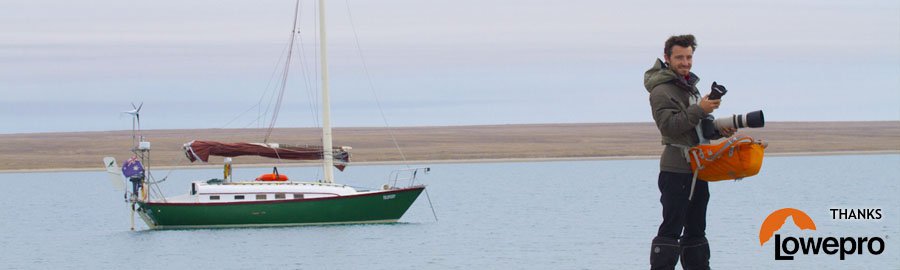
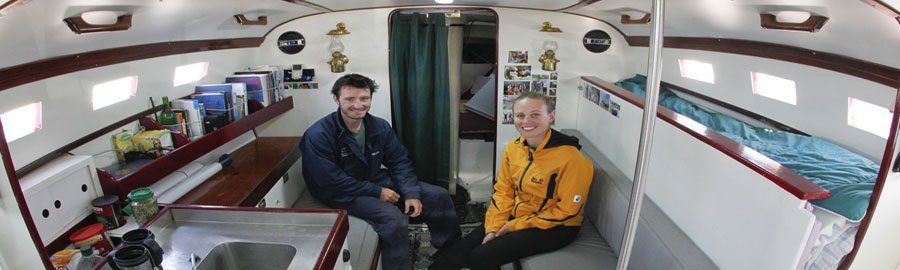
Having successfully negotiated the surfing, log-filled gauntlet into Tuk yesterday, we pulled in and tied up alongside Luc's yacht 'Roxane' at the little wharf here (he had everything ready for us - not only fenders out and ropes ready to pass to us, but also a hot lunch ready down below - he's wonderful). The good news for Luc is he got his autopilot working, and didn't have to hand-steer at all on the way here! Must be a huge relief. To our surprise, there was also two other yachts anchored in the bay, a lovely Danish couple aboard the 42 ft yacht 'SOL', and a New Zealand family aboard 42ft 'Tokimata', both heading the opposite way to us through the passage, from west to east. The most ever yachts ever in Tuk at the one time I bet! We had a good chat, got a group shot, swapped some pilot guides / info books (we gave them our Greenland info that we no longer need, and they gave us some Alaskan ones they no longer needed), and then once they'd filled up the diesel jerrycans they set off, making the most of the westerly winds out there at the moment. The GRIB files (if you believe them) say that the winds should swing East on Tuesday, which is when we expect to sail out of here, heading East firstly to Herschel Island (Canada, 130 nm from here approx), then the tiny Barter Island (Alaska, approx 100 nm onwards), where we'll wait for a good weather window to make the lengthy 280 nm hop to Barrow, where it seems like we should be able to sneak into the shallow lagoon there to wait for the most crucial weather window of all, to allow us to get safely through the dreaded Bering Strait all the way over 500nm to Nome, with really nowhere to stop and hide out from any bad weather along the way. Yikes.
Ok, better go and put this online! Jess just filled up our water tanks with water given to us by Patty - a friendly local - next is diesel, then fix a few things, and last of all, go to the post office first thing on Monday morning to legally post our shotgun back to our friend in Cambridge Bay (as you do!). I imagine once in Alaska, USA, we'll be able to buy another at the local convenience store, yes? =P
Hope you're all well, and thanks again for following along our adventure, and we look forward to hearing from you - especially with some more ideas for us to show/explain in our next video update!
Cheerio
Chris & Jess
www.YachtTeleport.com
|






 1
1 2
2 3
3 4
4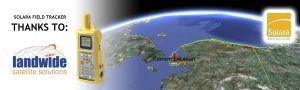 5
5 6
6 7
7 8
8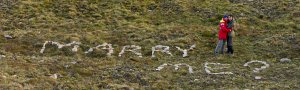 9
9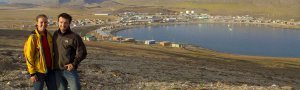 10
10 11
11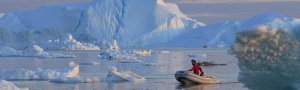 12
12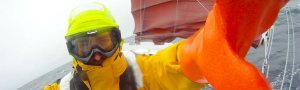 13
13 14
14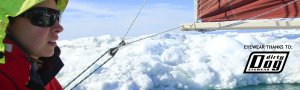 15
15 16
16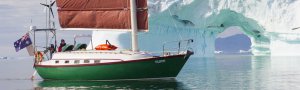 17
17 18
18 19
19 20
20 21
21 22
22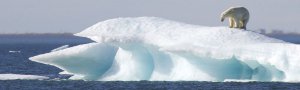 23
23 24
24 25
25 26
26 27
27 28
28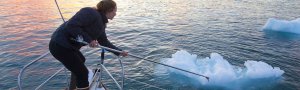 29
29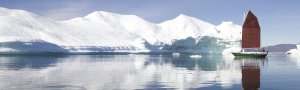 30
30 31
31 32
32 33
33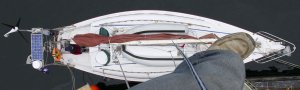 34
34 35
35 36
36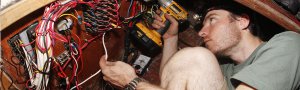 37
37 38
38 39
39 40
40 41
41 42
42 43
43 44
44