|
|
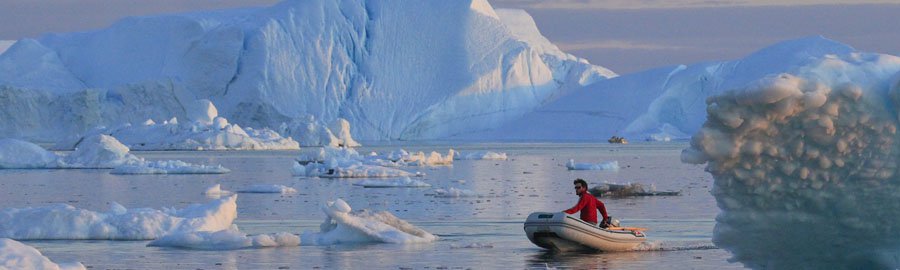
The cruising guide said "As you approach, openings in the ice front will appear". They didn't. The limitless huge icebergs - all grounded but slowly being muscled out to sea by those continually calving off the giant glacier way behind - formed one solid white mass blocking our approach to Ilulissat (Jakobshavn). Those furthest out eventually found water deep enough to float (300 feet+) and broke free, one by one sailing out towards the blue horizon in a ceaseless, slow-motion parade. Every minute or so the silence was split with a crack like a gunshot followed by the roar of thousands of tons of ice collapsing into the water as pieces of bergs gave-way, often leaving the remaining portion off-balance, causing the whole incalculable hulk to slowly roll over, submerged blue spires rising dramatically up into the air, spilling waterfalls of seawater back down into the churning circle of surf radiating outwards below.
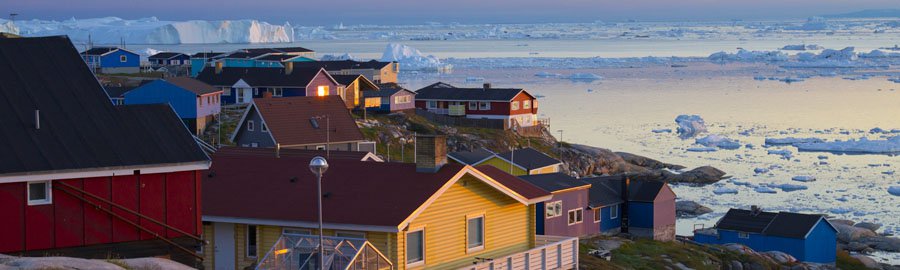
I've never seen so many icebergs, not even in photos. It was absolutely staggering, and as the sun swooped lower towards midnight, saturating the whole marvelously sculpted scene in pinks and oranges, I have to say it was the most memorable and breathtakingly beautiful thing we've ever experienced. Swinging out wide enough, we eventually found a safe route around and into the tiny harbor, stopping on the way to swap some coins for a large Halibut (a kind of thick, flat fish like a giant flounder) from two initially uncomprehending but broadly smiling fishermen pulling them in one after another from their little boat amongst the ice.
The crowded inner harbor was chockers with hundreds of fishing boats, mostly small, but also some classic old wooden ones, armored with battered sheets of metal nailed to their bows for ice protection, and some even sporting rusty (but evidently functioning) harpoon guns draped ready with coils of rope. A perpetual stream of dinghies returned with baskets of still flapping halibut, others spattered red with blood contained seals, and as we watched, a crowd gathered around one of the old harpoon boats as it putted alongside the main dock and started weighing out hunks of whale meat (presumably humpback) to sell on the spot. With barely room to maneuver, we thankfully spied an unoccupied front-face of one of the many 'finger-wharfs' (a floating dock where individual boat pens were separated only by a length of submerged wood with a half-deflated float on one end), and tied up, thankful for our now reversible engine! We were lucky to find an empty berth, the only other empty pens/spaces were amusingly filled with boat-sized hunks of ice, seemingly quietly docked also. We enjoyed fresh fish for dinner and sank into a blissfully contended sleep at around 3 AM.
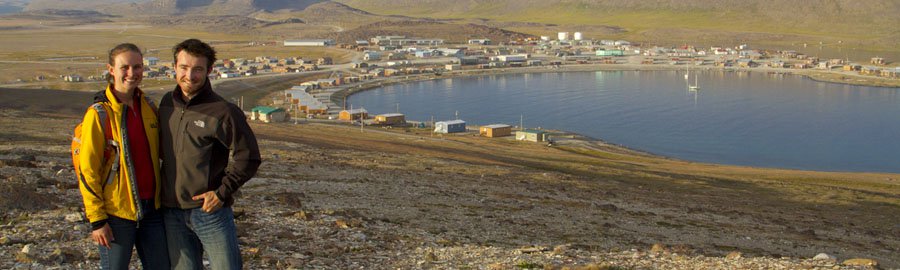
Needless to say, we slept in, and woke to the background chorus of boisterous sled dogs howling and barking in the distance. There are over 5,000 dogs in this community, fed on scraps from the fishing industry, and all of them are the same type. Actually, north of the Arctic Circle in Greenland, it is forbidden to have any dog other than a Greenlandic sled dog, thus keeping their specialist breed pure. They are a magnificent, proud and intelligent looking dog, and as we walked around town after pancakes for breakfast, we were immediately besotted with them. Over a year old, the dogs must be chained, usually in one of the many dog-zones skirting the town, however the puppies - and there were hundreds of them - are free to wander. Two adorable youngsters stumbled clumsily towards us through a field of daisies and almost exhausted our camera batteries before we'd even started the hike up to overlook the glacier.
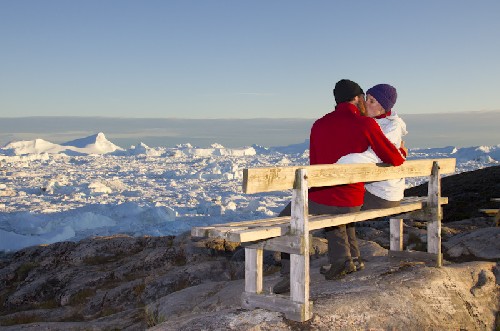
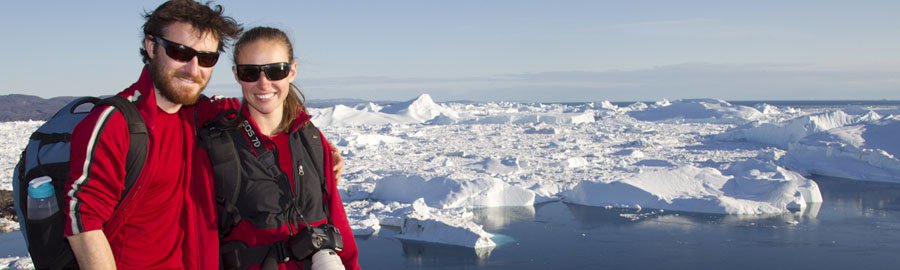
It was lucky we had spares, as the view from the humble wooden park-bench style seat - silhouetted against the skyline as we walked up towards it, was one of those moments in life where you just stop and stare, speechless for a second, and then breath "wowÉ". There was just so much ice, spreading out into the distance. And every hunk was just so enormous, and so different. "Good thing we didn't try and sail through that mess," Jess said, "It really is just one solid mess." We thought we'd ticked "See Glacier" off our bucket-list back at Fox Glacier in New Zealand. How completely trivial Fox seemed now.
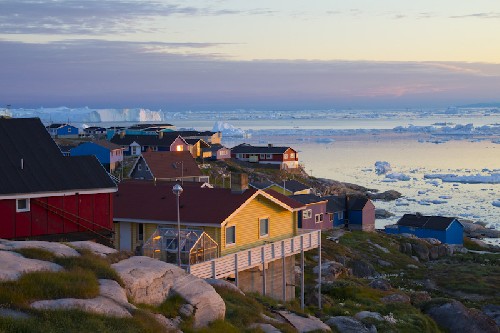
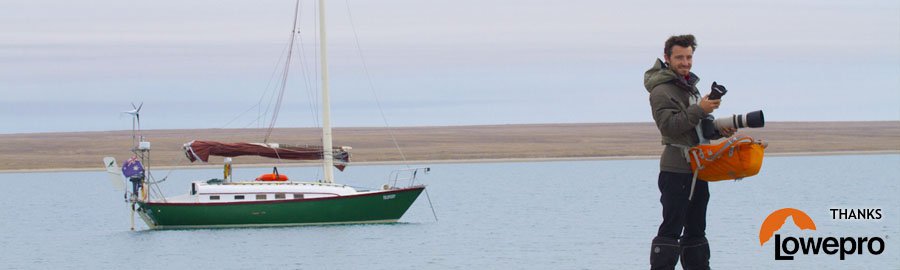
We spent two amazing days doing various walks, each loaded down with camera gear in our Lowepro backpacks taking photos of puppies, multi-coloured houses, dogs, ice, mountains, more dogs and puppies, some promo photos for our sponsors, and perhaps best of all, some time-lapse photos of drifting bergs - the larger ones drawn inexorably to the left by deeper currents, while smaller chunks raced across to the right, and still other bands of ice swirled in different directions entirely, all in the space of 10 minutes. Wait for the video update!
The sunlight softened and turned to gold at around 10PM and stayed amazing until around 2AM, at which time we'd come back onboard for dinner (including that celebratory bottle of champas, thanks Jeff!), before taking more pics from around 3 or 4AM as the twilight brightened again. We slept during mid-mornings, checked our emails at a hostel down the road from the whale meat shop, past the 'give-way-to-sleds' road sign, cruised around the ice for some different photos in our awesome little inflatable, arctic-proof dingy that Bill from Amphibious Inflatables custom made for us back in Halifax (it's so good! Thanks again!) It really was photography heaven, and we both mused about spending a full year here sometime, photographing everything throughout the changing seasons.
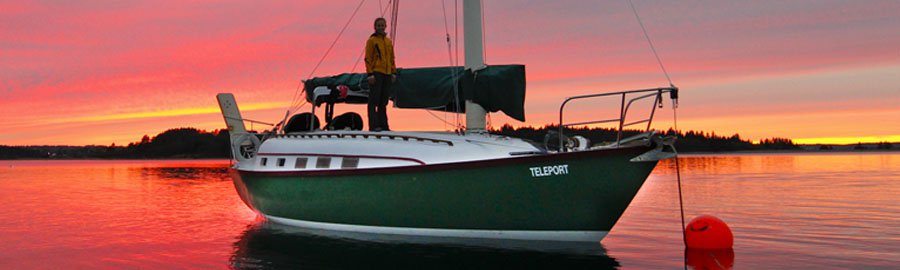
On our last evening a large hunk of ice perhaps 10m across somehow drifted right inside the inner harbor (almost filling the narrow entrance as it jostled through), which was funny, until it turned and came directly for us. A quick scout of the harbor revealed one more empty berth, and we slipped our lines and changed places in the nick of time. We refueled and left early on 5th August, passing last-night's bergy-bit now docked firmly where Teleport had been.
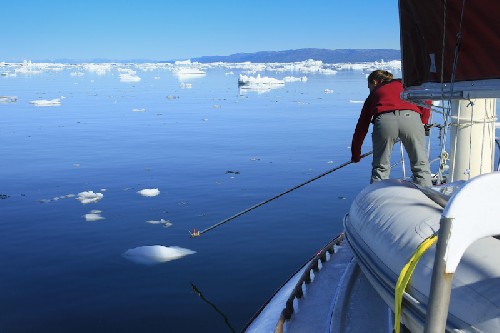
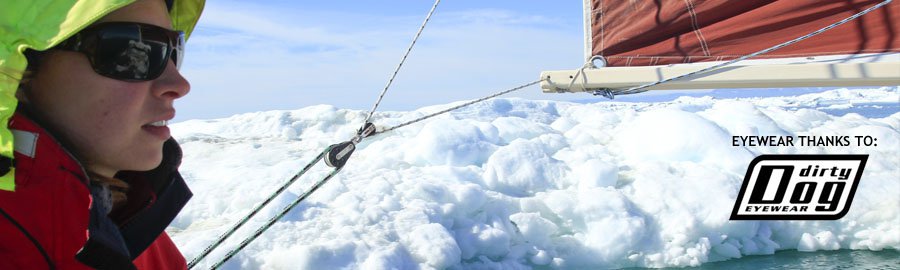
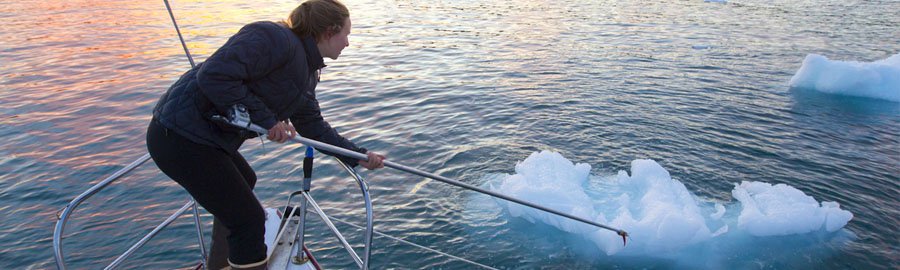
Now if we thought there was a lot of ice on the way in, it was nothing compared to that full day of sailing from Ilulissat to Sarqaq. Thankfully it was dead calm (thus we were motoring), and we could see for miles, though at times, the view ahead looked hopeless - such a tight mosaic of bergs, bergy-bits and growlers that we were sure we'd have to turn back. However as we cautiously approached even these denser regions, little gaps and openings in the bobbing, shifting maze always opened up, and we slowly wove our way forward, reversing, swerving, always scanning for the best route ahead, Jess at the bow with our 'Ice-pole' (long stick with spike) lancing and coaxing aside smaller unavoidable 'lesser-evil' pieces as we bore down upon them, while back at the helm I tried to simultaneously guide us accurately through tight openings between say, table-size to room-sized hunks forming ever-shifting goal-posts, while also gazing out ahead to ensure we had somewhere to go after that. After the initial stress wore-off, and having leaned over to inspect the waterline after a few glancing blows from even suitcase-sized growlers which always amazingly left no mark whatsoever, we calmed down a little, started to enjoy the tinkling-sound in the air of millions of little bits of ice clinking together around us, and as Jess called back from her ice-poking position at the bow, "It's actually kinda fun, it's like a gameÉ". "Yeah," I added, "except in this game, you only get one lifeÉ" We took it slow, and stopped often, even went backwards occasionally, and made it to the small community of Sarqaq on the Northern shore of Disko Bugt close to midnight (again, perfect lighting!)
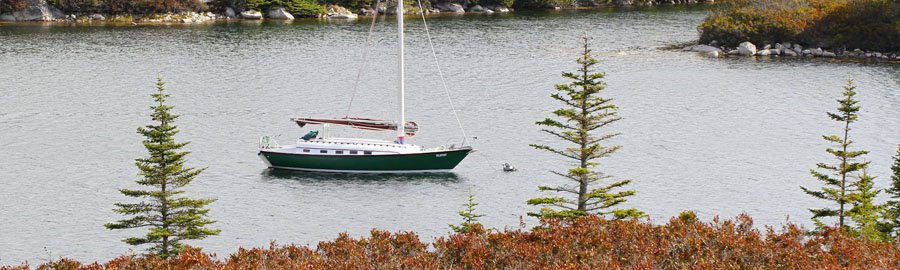
As we drew closer, through the binoculars we were surprised to see not one but three yacht masts sheltered around the corner in the anchorage. It turned out to be two yachts, an American one on it's way south again, and one beautiful, huge French schooner (2 masts) called 'La Louise'. We puttered around the anchorage trying not to wake everyone up with our popeye engine banging away, found a good spot to anchor in about 25 feet of water, dropped our extra sturdy 15kg Rocna anchor (which we are growing to love, thanks for the tip Annie) and snuggled down below, thoroughly worn out from the days high-concentration cruising.
About 15 minutes later, just as we drifted to sleep, we heard the scrunching clunk of ice against the hull! We exploded out of bed and were on deck in our socks in an instant, ice-pole in hand, fending off what became an endless procession of growlers that swept through the anchorage. Everyone was on deck on the other two yachts as well - furthest in, the Americans would fend off a huge drifting plate of ice some 5m wide and perhaps 3m deep, and it would then drift down upon the enormous French yacht, and then everyone would turn, and take photos of the poor little mini junk-rig yacht, furthest out, as it got swamped with growlers from both sides. The bigger ones were so immovable that pushing them off only resulted in pushing teleport away, before our anchor pulled us back into them again. The worst was when a biggish one with a rather gnarled, twisted underwater shape wound itself around our anchor line and it was a bit of a juggling act to free us before it a) cut the line, or b) dragged us with it and our anchor out of the bay. It was a long night, and we were forever getting back up and pushing off from yet more ice, while in the background behind the headland we could hear the explosions and roars from nearby bergs creating yet more bergy bits presumably headed for us. Good times. Interestingly, when poked, the local area of the ice often bangs or audibly cracks, evidently under huge internal stresses - no wonder the bergs breaking sound so explosive, often firing ice way into the air.
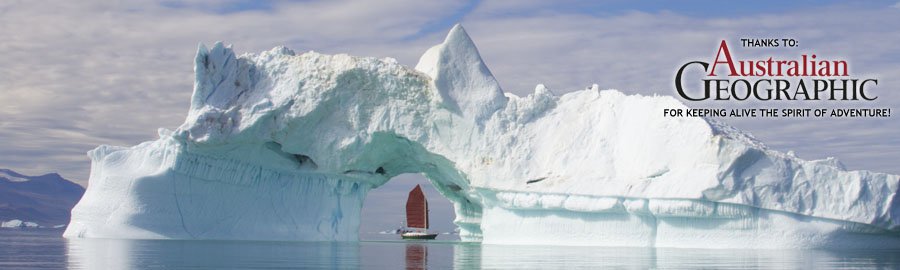
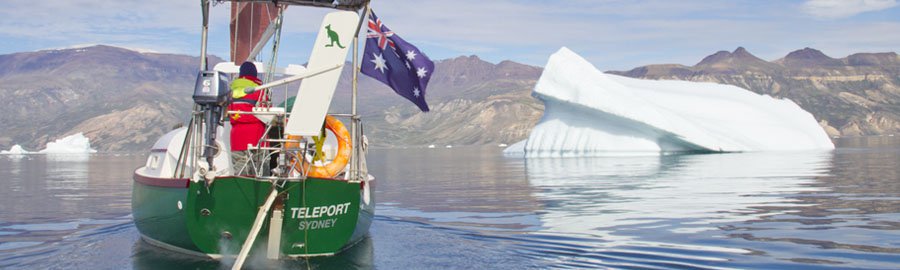
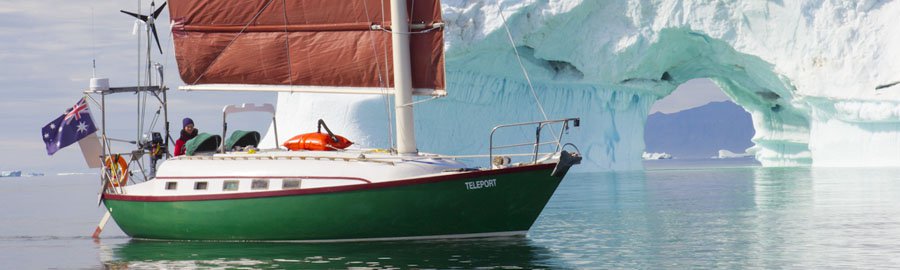
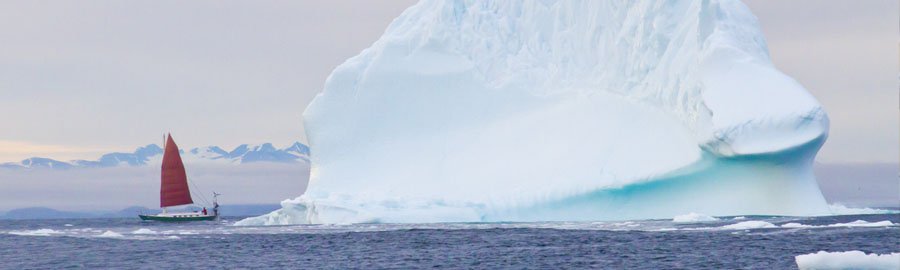
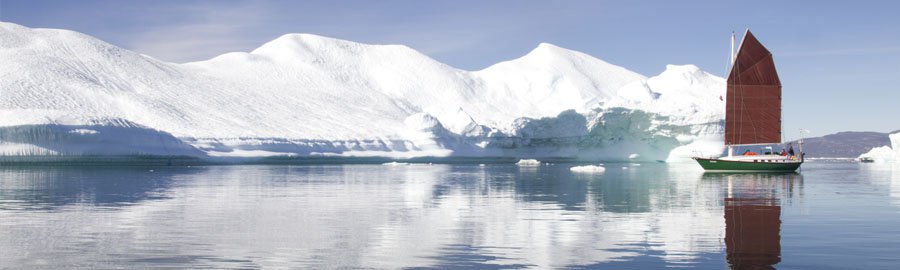
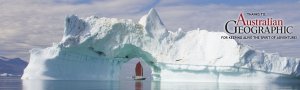
The next day the weather was even more idyllic. We motored beneath a bright blue sky, not a breath of wind, slightly less bergy-bits, and some of the most beautiful icebergs we've seen. Finally we spotted the one we were both secretly looking for. "There - that huge one's got the perfect arch in it!" We headed over as close as we deemed safe, deployed the dingy, put in the oars, seat, and I hopped in with the little handheld VHF radio (Thanks Dad), and Jess (full sail up for the photo despite the zero wind!) puttered around the other side as I (felling suddenly rather small), rowed into position. "Ok, go for it!" Teleport slid into my view through the arch, perfectly filling the available height. We got the distances just right. It was perfect. Reflections, the lot. On the third pass, a berg behind me decided it was a good time to break and roll over, and I got that on film. Score! It was slightly worrying though, filming the expanding shockwave coming towards me, wondering at what point it was going to settle. I was fine. It was a long lens.
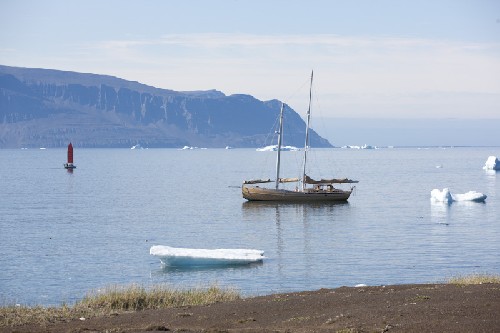
By 10PM we were ready to call it a day, and spotted the French yachts twin-masts tucked in a cove nearby, and so we headed in. It's a bit nerve-wracking heading into coves etc around here - none have depths etc on the chart, and you just have to gradually feel your way in, staring at the depth sounder and having someone on the bow looking down hoping not to see anything. The French guys came on deck and waved us around a rocky area we hadn't yet seen and they'd already hit, and once settled, invited us over for drinks. What a stunning yacht! See www.LaLouise.fr Purpose built for chartering up in the arctic, the guy (skipper, owner, and builder) is Thierry Dubois - three times round the word solo yacht racer (once rescued by the Australian Navy, you might remember a harrowing photo in the news of a man kneeling, clinging on between the twin rudders of his huge upturned racing yacht in 12-13m wavesÉ?) Anyway, quite the character, and an amazing cook so we discovered the following evening when they turned up at our next anchorage at the tip of Disko Bugt and invited us around for dinner! Sadly, after that, they turned back south, and we continued our merry way North. We both agree that Disko Bugt ('Disko Bay') has been the highlight of this trip to date - it's the unforgettable times like this past week that make up for all the 'other' times.
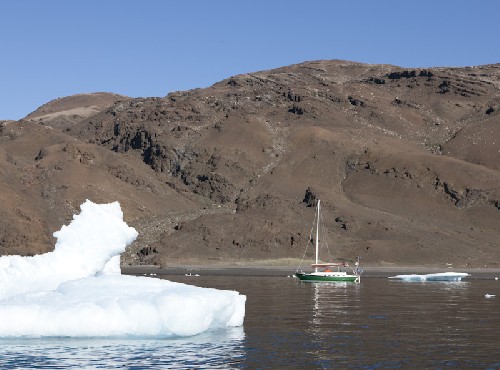
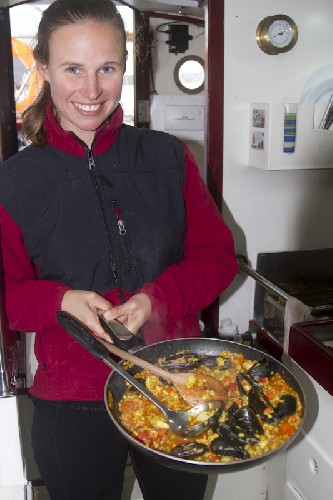
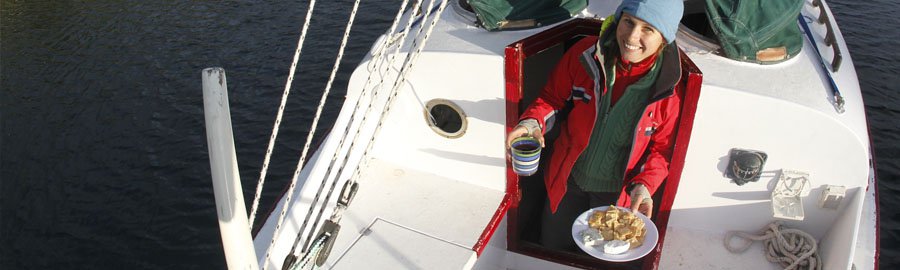
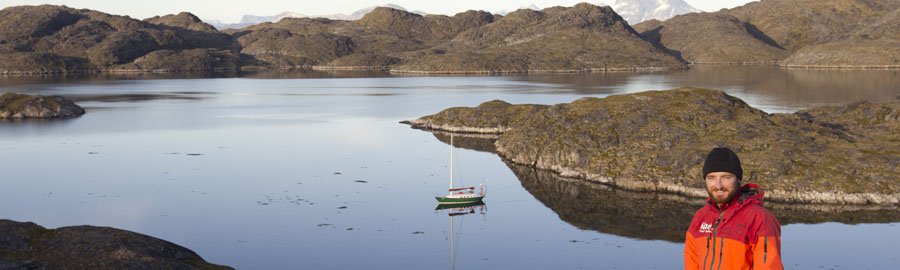
After another long 'day sail' of 14hrs we pulled into an anchorage surrounded by stunning green hills, visually refreshing after days of passing essentially a barren, brown, plantless moonscape, ripped by landslides one of which we actually saw. We went ashore to fill our water container from a melt-water stream coming from a tongue of snow reaching down a crease in the mountains. Such pure water, and growing in massive clumps on the riverbanks I recognized the edible arctic plant Mountain Sorel that Clark and I used to munch on whenever we were lucky to stumble across some during our Victoria Island crossing (www.1000HourDay.com). It's a plant with small fleshy heart-shaped leaves, which have a very tasty, almost-sweet berry like taste, and are apparently loaded with vitamin-c. We added some to our paella that Jess made for dinner, complete with fresh caught cod, and some mussels we collected from the shore.
It's always fascinating to wander along the shore around here, all sorts of things drift up and or left behind. Old wooden sleds, floats, whale bones, and in fact, the French yacht stumbled upon a rather ancient looking sun-bleached human skull, on the same barren, pebbly shore we also wandered. A little haunting wondering what fate befell that poor character.
A few days later we pulled, at last, into Upernavik - apparently Greenland's most northerly town with full services, and our last stop before turning West and crossing Baffin Bay back across to Canada - aiming for Pond Inlet on Baffin Island, where we've organized a new autopilot to be waiting for us at the post office.
Very approximately, we've now travelled about 2,200 miles from Halifax, about 60% of this year's 3,700-ish mile adventure. Hopefully the 400 mile , 4-day crossing from here to Baffin Island won't be anything like as long or traumatic as the trip over from Canada (the weather systems aren't typically so angry up here), but we do have some things to look out for, most notably this time there will be ice bergs all the way across as you can see on the ice map, and scarier still, there is a large 100 by 150 mile plate of the sea in the way that is still basically frozen - our first taste of pack-ice. We'll see, hopefully it'll have melted more and also drifted further north out of our way by the time we get near. Take a look at the attached ice-chart. Thanks very much to Kev (Jess's brother) and Clark (my 1000HourDay arctic exped buddy) for compressing and emailing these to us en-route.
So - next stop - the Canadian Arctic!
Talk to you then!
Cheerio,
Chris & Jess
www.YachtTeleport.com
|






 1
1 2
2 3
3 4
4 5
5 6
6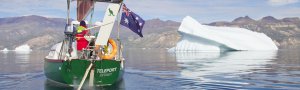 7
7 8
8 9
9 10
10 11
11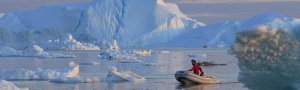 12
12 13
13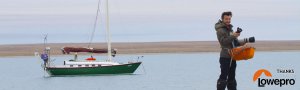 14
14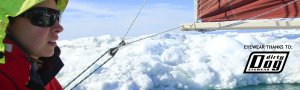 15
15 16
16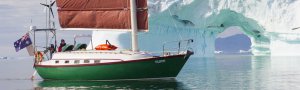 17
17 18
18 19
19 20
20 21
21 22
22 23
23 24
24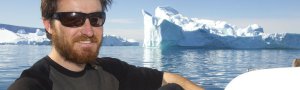 25
25 26
26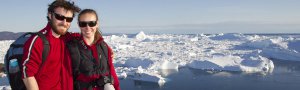 27
27 28
28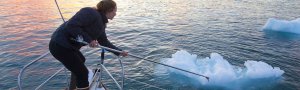 29
29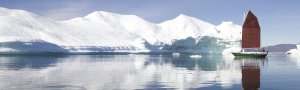 30
30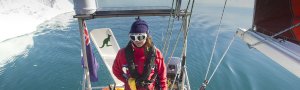 31
31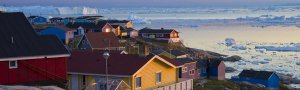 32
32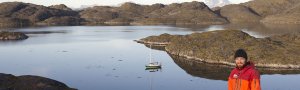 33
33 34
34 35
35 36
36 37
37 38
38 39
39 40
40 41
41 42
42 43
43 44
44